
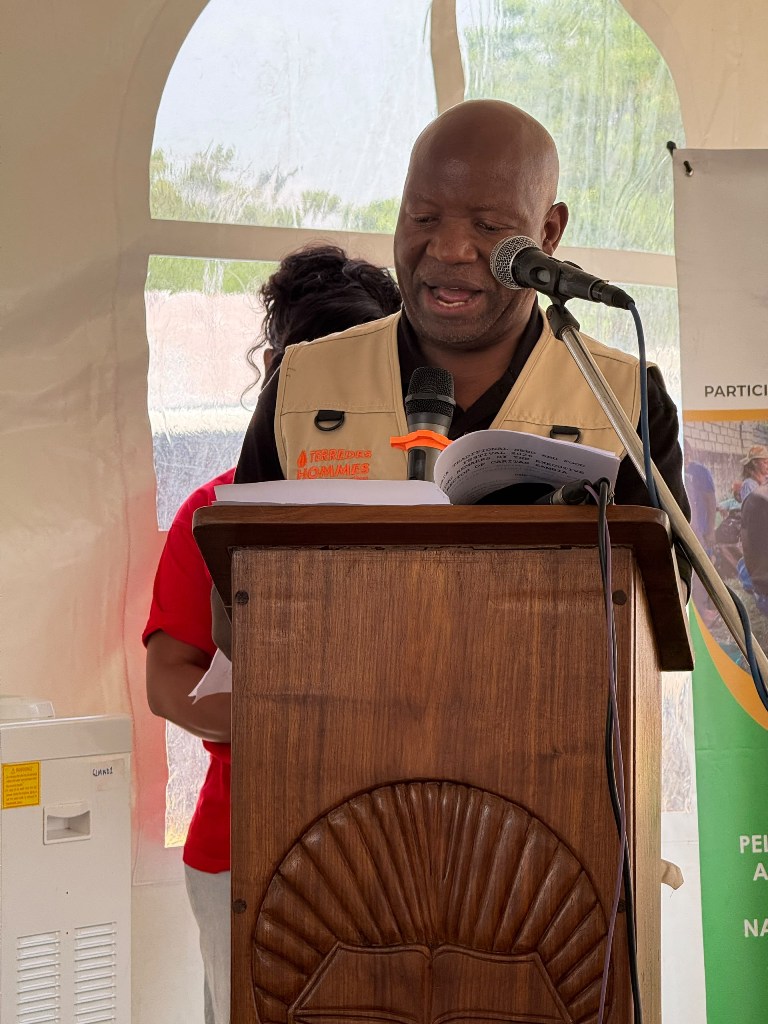
Theme: “Innovate Today. Nourish Tomorrow – Women Farmers Leading with Traditional Seed and Food for Good Health”
Date: October 30, 2026
In a few weeks, the rains will come.
And when they do, farmers across this country will walk into their fields and put seed into the ground. Whatever they plant will decide what our children eat, how healthy they grow, and whether Zambia can feed itself when the next drought comes.
So, the most important question in this country this morning is not a question for next year. It is a question for this planting season. Whose seed will go into Zambian soil?
Every season we answer that question wrongly; we lose something we can never get back. A sorghum that survived every drought our grandparents knew. A cowpea that fed a family through the hungry months. A vegetable our grandmothers cooked that our grandchildren will never taste.
It does not happen with headlines. It happens quietly, one season at a time, while we are busy with other things.
Ladies and gentlemen, I did not come here this morning only to open a festival. I came to sound an alarm.
- Our Guest of Honor, Madam Speaker
- Members of parliament present
- Traditional leaders present
- Representatives of Consortium Partner Organizations,
- Civil Society, and Academia,
- Representatives from the Private Sector and Farmer Organizations,
- Distinguished Guests, Ladies and Gentlemen,
- And most importantly, our courageous Women Farmers, the true custodians of our land, seed, and heritage:
On behalf of Caritas Zambia and our consortium partners, it is an absolute honor and privilege to welcome you all to the Zambia Traditional Seed and Food Festival 2026.
We gather today not merely to celebrate a festival, but to affirm a conviction: that the future of Zambia’s food security, health, and climate resilience lies right here in our soil, carried in the hands of our local farmers, and preserved through our rich tradition of indigenous seeds.
As we celebrate the 2026 theme, as the Year of honoring Women Farmers, and align ourselves with the global spirit of World Food Day, our theme, “Innovate today. Nourish tomorrow – Women Farmers Leading with Traditional Seed and Food for Good Health”, could not be more timely or urgent.
The women who have been holding the line
For generations, women have been the silent pillars of our food systems. They are the primary seed keepers, the researchers in our rural communities, and the guardians of culinary tradition. Long before modern science spoke of biodiversity and agroecology, our mothers and grandmothers were saving and passing down seed varieties that could withstand drought, resist pests, and nourish their families without relying on expensive, imported inputs.
What we are losing
Today, our national food system stands at a critical crossroads. Globalization and rapid urbanization have flooded our markets with highly processed foods. In the process, we have seen a worrying decline in dietary diversity. Nutrient-dense, indigenous grains like sorghum and millet, resilient legumes like cowpeas (Ilanda, Kandolo), traditional vegetables such as Bondwe, Chibwabwa, Kachesha, Kalembula, and Katapa, and wild fruits like Masuku and Infungo are increasingly marginalized, some even facing the threat of extinction.
This shift has not solved our nation’s nutritional challenges. Instead, it has worsened undernutrition while giving rise to diet-related non-communicable diseases.
Hear me clearly. Extinction is final. When a seed is gone, no grant, no project and no laboratory can bring it back. And when the seed goes, the knowledge goes with it: how to grow it, how to store it, how to cook it, and why it mattered. That knowledge lives today in the hands and memories of women in our villages. Many of them are elderly. Every year we wait, fewer of them remain to teach us. We are running out of time to learn from them.
Tradition is not the past
So let me correct a myth. Traditional seed is not backward. Traditional food is not old-fashioned.
To change the narrative, we must reclaim our local food heritage. Traditional seeds and foods are not fragments of the past; they are modern solutions for climate change and health. They are naturally resilient to harsh weather conditions, require fewer chemical inputs, and offer rich nutritional profiles that our bodies desperately need.
However, tradition alone is not enough to secure our future. We must pair indigenous knowledge with appropriate modern innovation.
Our farmers are already innovating, improving farmer-managed seed systems, practicing agroecological farming, and finding creative ways to add value to traditional crops. But they cannot do it alone. Too many of our farmers face steep barriers, such as high costs of small-scale irrigation, lack of affordable processing equipment, weak extension services, and limited access to seed markets.
Every season these barriers stand, more farmers give up their own seed. Every season they give up, we lose more. So, if we are serious about “Innovating Today to Nourish Tomorrow”, the emphasis must fall on the word today. Three things cannot wait:
If we are serious about "Innovating Today to Nourish Tomorrow," we must break down these barriers:
- We must invest in farmer-managed seed enterprises.
- We must make appropriate, affordable technology accessible to rural women.
- And we must create policies that recognize and protect farmers’ rights to save, exchange, and sell their traditional seeds.
A farmer who is not free to save her own seed is not free. And a nation whose farmers are not free cannot call itself food sovereign.
What we are asking of you, starting today
Over the coming days you will see Zambia’s agricultural wealth with your own eyes, in the exhibits, the live knowledge-sharing, the policy dialogues and the conversations in between. But you were not invited here only to look. You were invited here to act.
To our policy makers and government partners: We urge you to ensure that national agricultural strategies actively integrate gender-inclusive, agroecological frameworks that support farmer-led seed systems alongside conventional approaches. Please do not leave this for the next review cycle. The seed will not wait for the next review cycle.
To our private sector academia and research institutions: We invite you to collaborate with women-led cooperatives to develop market pathways and appropriate processing technologies that keep value within local communities. Leave this festival with at least one partnership you did not have when you arrived.
And to our women farmers: We see you, we honor you, and we stand with you. You are not just producers; you are leaders shaping a healthier, more sovereign Zambia. You have carried this alone for too long, and from today you will not carry it alone.
Conclusion
As Caritas Zambia, alongside our consortium partners, we remain deeply committed to promoting food sovereignty, social justice, and environmental stewardship grounded in human dignity.
Let this festival serve as a launching pad for stronger networks, bolder policies, and renewed pride in our local food. May we leave this event inspired to nourish our families, support our local farmers, and build a resilient food system for generations to come.
With these few words, it is my singular honor to welcome you all to the Zambia Traditional Seed and Food Festival 2026.
Thank you, God bless you, and enjoy the festival!